
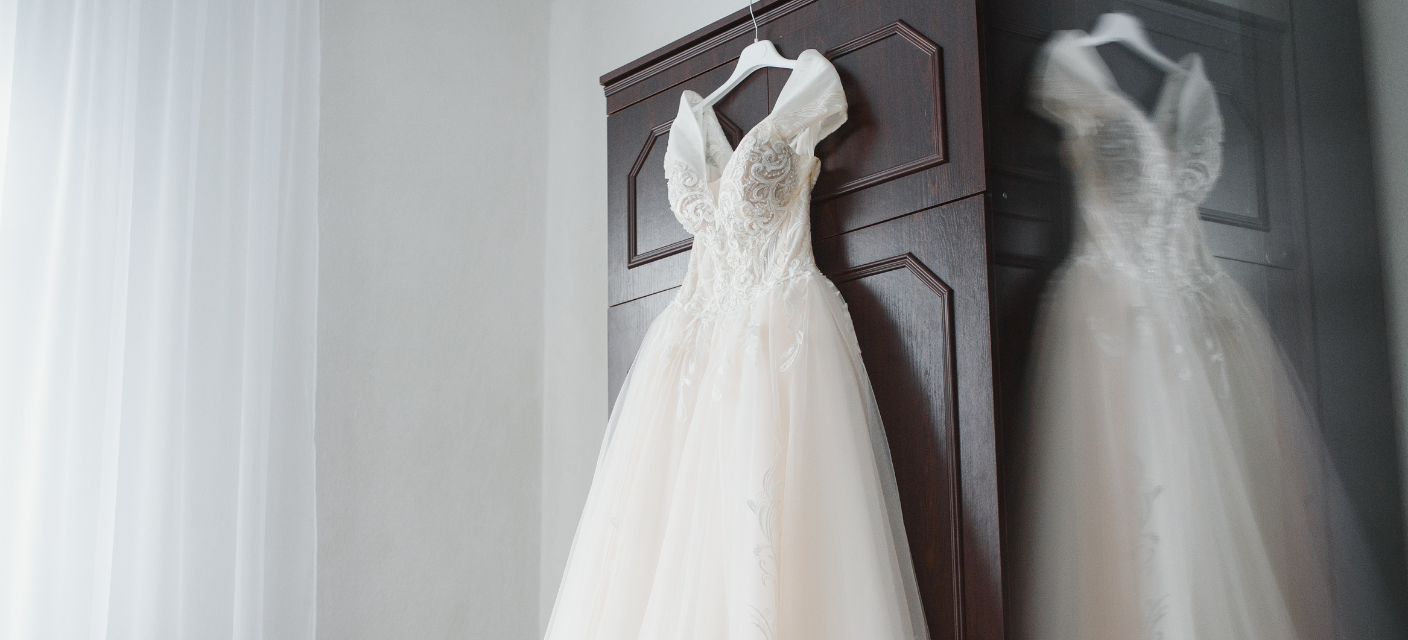
Your wedding dress is one of the most sentimental garments you will ever own. It represents a meaningful day, a major milestone, and memories you may want to preserve for decades. But even the most beautiful gown can become damaged if it is stored the wrong way.
Many brides do not realize that long-term damage often happens slowly. Yellowing, fabric weakening, creasing, mildew, and stretched seams are usually the result of storage mistakes made after the wedding, not just wear on the big day itself.
If you are wondering how to store a wedding dress properly, the first step is knowing what not to do. Here are the top wedding dress storage mistakes and what to do instead to help protect your gown for years to come.
Why Proper Wedding Dress Storage Matters
Wedding gowns are made with delicate fabrics, detailed construction, and often intricate embellishments. Lace, satin, tulle, silk, beading, and embroidery all require thoughtful care. Improper wedding gown storage can lead to permanent discoloration, shape distortion, fabric breakdown, and damage that may be difficult or impossible to reverse.
The best way to store a wedding dress is to combine professional cleaning with preservation-safe materials and a stable storage environment. A little care now can make a major difference later.
Mistake #1: Waiting Too Long to Clean the Dress
One of the most common wedding dress storage mistakes is delaying cleaning after the wedding. Even if your dress looks clean, it may still have invisible residue from sweat, perfume, body oils, makeup, champagne, cake frosting, grass, or dirt.
Over time, these stains can oxidize and turn yellow or brown. The longer they sit, the harder they are to remove.
What to do instead
Schedule professional wedding dress cleaning and preservation as soon as possible after the wedding. Prompt cleaning helps treat visible and invisible stains before they set into the fabric. This is one of the most important steps in long-term wedding dress preservation.
Mistake #2: Storing the Dress in Plastic
Plastic garment bags may seem protective, but they are not the best solution for long-term wedding gown storage. Plastic can trap moisture, restrict airflow, and create an environment where mildew, odor, or fabric yellowing can develop.
What to do instead
If your dress needs temporary hanging before preservation, use a breathable fabric garment bag. For long-term storage, choose a wedding dress preservation box or archival-quality storage solution made with preservation-safe materials such as acid-free tissue and acid-free board.
Mistake #3: Hanging the Dress for Too Long
Many brides leave their gown hanging in a closet for months or even years. While this may seem convenient, it can place too much strain on the shoulders, straps, bodice, and seams, especially if the dress is heavy or heavily embellished.
Over time, hanging can distort the silhouette and stretch delicate areas of the gown.
What to do instead
For long-term storage, most gowns are better preserved in a proper preservation box where they can be supported more evenly. This reduces stress on the garment and helps protect the structure of the dress.
Mistake #4: Using the Wrong Storage Box
Regular cardboard boxes, plastic bins, and generic keepsake containers are not designed for delicate bridal fabrics. These materials may contain acids, dyes, adhesives, or chemicals that can transfer onto the gown over time and contribute to discoloration or fabric deterioration.
What to do instead
Use a wedding dress preservation box designed specifically for long-term gown care. Acid-free materials help protect against yellowing and breakdown, while supportive packing helps preserve the overall shape of the dress.
Mistake #5: Keeping the Dress in the Attic, Basement, or Garage
Where you store your gown matters just as much as how you store it. Attics, basements, and garages are often exposed to heat, humidity, cold, dust, and pests. These unstable conditions can cause mildew, odor, fabric damage, and discoloration.
What to do instead
Store your preserved gown in a cool, dry, climate-controlled area inside your home. A bedroom closet or interior storage space is usually a much safer option than any area with temperature swings or excess moisture.
Mistake #6: Folding the Dress Without Proper Support
Improper folding can create hard creases, stress delicate seams, and crush embellishments. Satin may show deep fold lines, while lace, tulle, and beading can become snagged or pressed in ways that affect the look and integrity of the dress.
What to do instead
Use acid-free tissue to support folds and cushion delicate details. Proper folding and padding are a key part of wedding dress preservation. A gown should not simply be placed into a box. It should be positioned carefully to reduce stress points and protect delicate fabrics.
Mistake #7: Handling the Dress Too Often
It is natural to want to revisit your wedding dress, show it to loved ones, or take it out on anniversaries. However, frequent handling can transfer oils and dirt from your hands onto the fabric. Repeated unfolding and refolding can also cause new creases and increase the risk of snags.
What to do instead
Handle your gown as little as possible. When you do inspect it, make sure your hands are clean and dry, and lay the gown on a clean surface. Limiting handling helps reduce unnecessary wear over time.
Mistake #8: Trying DIY Cleaning or Repairs
Household stain removers, steamers, and online DIY cleaning advice can do more harm than good. Wedding dresses often combine multiple fabrics, trims, linings, boning, lace, and embellishments, all of which can react differently to moisture, heat, and cleaning products.
What to do instead
For stain removal, cleaning, and bridal gown preservation, trust a professional who specializes in wedding dresses. What seems like a quick fix at home can set stains, weaken fibers, or damage decorative details.
Mistake #9: Forgetting the Veil and Accessories
The gown is usually the main focus, but accessories like the veil, gloves, sleeves, overskirts, or heirloom pieces also deserve proper care. These items are often placed in drawers, bags, or closets without the same level of protection.
What to do instead
Include important accessories in your preservation plan whenever possible. Proper cleaning and storage help protect the full set and preserve the memories tied to your wedding day.
Mistake #10: Putting Off Preservation for Too Long
One of the biggest wedding dress storage mistakes is assuming preservation can wait indefinitely. Life moves fast after the wedding, and the dress often ends up hanging in a closet or folded in a temporary box far longer than intended.
The longer you wait, the more likely it becomes that stains will set, folds will deepen, and the condition of the gown will decline.
What to do instead
Make a plan for wedding dress cleaning and preservation soon after the wedding. Prompt care gives your gown the best chance of staying beautiful, whether you want to keep it as a keepsake, pass it down, or simply protect it for the future.
How to Store a Wedding Dress the Right Way
If you want to know the best way to store a wedding dress, keep these basics in mind:
Clean It First
Always have the gown professionally cleaned before long-term storage. Invisible stains can cause major damage over time.
Use Preservation-Safe Materials
Choose acid-free tissue, archival-quality materials, and a preservation box designed for wedding gowns.
Store It in a Climate-Controlled Space
Keep your dress in a cool, dry part of your home away from heat, humidity, and direct sunlight.
Limit Handling Over Time
The less your gown is moved, unfolded, and touched, the better protected it will be.
Final Thoughts on Wedding Dress Preservation
Your wedding dress deserves more than a temporary closet solution. Knowing how to preserve a wedding dress starts with avoiding the most common storage mistakes and choosing a better path forward.
Professional wedding dress cleaning and preservation, paired with the right storage materials and environment, can help protect your gown from yellowing, stretching, mildew, and long-term fabric damage.
At Deeya Cleaners, proper bridal gown care is about helping you protect an important memory with the attention it deserves.
FAQs About Wedding Dress Storage
How should I store my wedding dress after the wedding?
The best way to store a wedding dress is to have it professionally cleaned first, then place it in a preservation-safe storage box with acid-free materials and keep it in a climate-controlled area inside your home.
Is it bad to leave a wedding dress in plastic?
Yes, plastic is not ideal for long-term wedding dress storage because it can trap moisture and contribute to yellowing or mildew over time.
Can I hang my wedding dress in the closet long-term?
Hanging a wedding dress long-term is not usually recommended, especially for heavier gowns. Over time, the weight of the dress can stretch straps, seams, and the bodice.
When should I preserve my wedding dress?
You should preserve your wedding dress as soon as possible after the wedding. Early cleaning and preservation help prevent stains from setting and reduce the risk of long-term damage.