
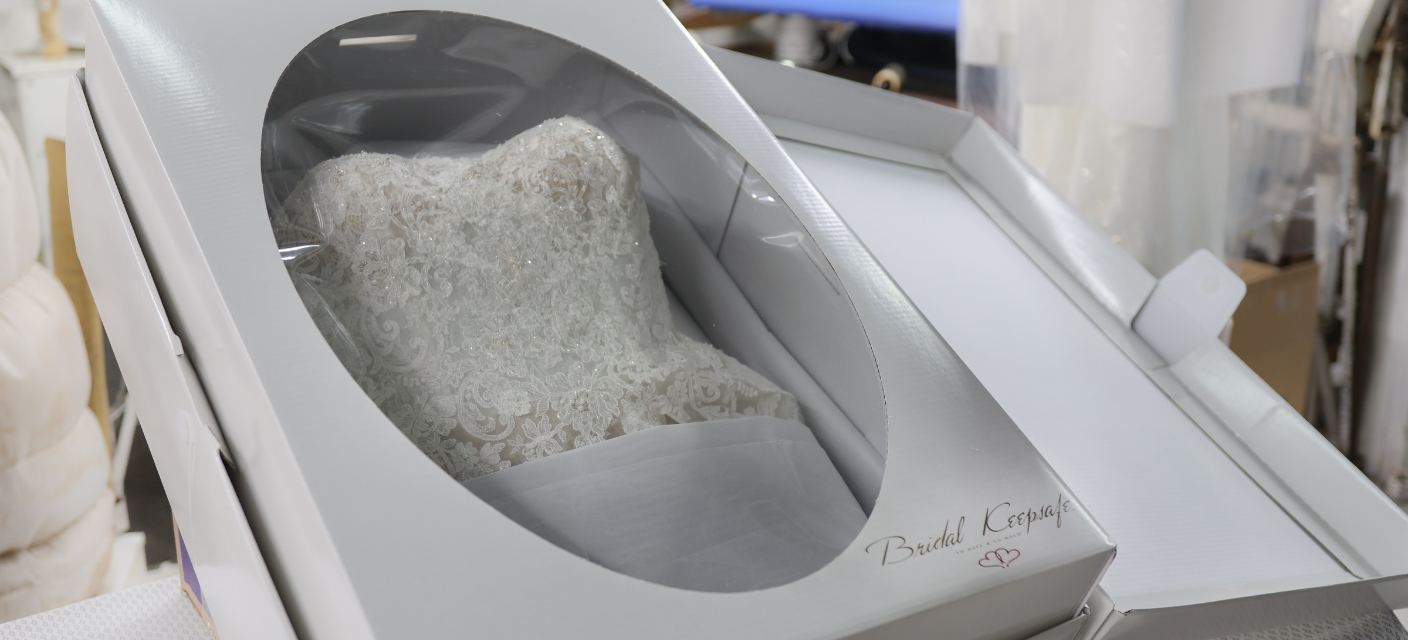
After the wedding, your dress becomes more than something you wore for one day. It becomes a keepsake, a memory, and possibly an heirloom you may want to pass down, repurpose, sell, or simply protect for years to come.
That is why wedding dress preservation matters.
At first glance, a DIY preservation kit can seem like the more affordable choice. You may find an acid-free box, tissue paper, gloves, or a basic gown storage kit online and think, “This should be enough.” But the real cost of preserving a wedding dress is not just the cost of the box. It is the cost of cleaning the gown properly, treating hidden stains, protecting delicate fabrics, and avoiding damage that may not show up until months or years later.
So, when comparing professional wedding dress preservation vs. DIY preservation kits, the better question is not just, “Which one costs less today?” It is, “Which one protects the dress best over time?”
The Upfront Cost: DIY Looks Cheaper
DIY wedding dress preservation kits often include some combination of an acid-free storage box, acid-free tissue paper, gloves, and sometimes a bust form or garment cover. Current examples of at-home storage kits and acid-free bridal boxes range from around $30 to $125 or more, depending on the size and materials included. Professional wedding dress preservation, on the other hand, commonly ranges from about $250 to $1,000, depending on the gown, fabric, embellishments, staining, location, and level of service.
At first, that price difference can feel significant.
But here is the issue: most DIY kits only address storage. They do not properly clean the dress. They do not inspect fabric under professional lighting. They do not treat invisible stains. They do not know how to handle silk, lace, tulle, beading, sequins, appliqué, or layered construction. And they do not give you a trained specialist making decisions based on your specific gown.
That is where the real cost begins.
The Hidden Cost of Stains You Cannot See
One of the biggest risks with DIY preservation is assuming your dress is clean because it looks clean.
Wedding gowns often carry invisible stains from champagne, white wine, sweat, body oils, perfume, makeup, grass, dust, or sugar-based spills. These stains may not be obvious when you put the dress away, but over time they can oxidize and become yellow or brown. Once that happens, they may be much harder—or sometimes impossible—to fully remove.
Professional preservation starts with inspection and cleaning before the gown is packed away. This matters because preservation is not just about placing a dress in a pretty box. It is about stabilizing the fabric so stains, acids, moisture, and environmental exposure do not continue damaging the gown over time.
DIY Kits Do Not Replace Professional Cleaning
A quality preservation box is helpful, but it cannot correct what is already on the dress.
If your gown has soil along the hem, perspiration in the bodice, makeup near the neckline, or stains in the train, boxing it without proper cleaning may trap those contaminants inside with the fabric. That can lead to yellowing, odor, fabric weakening, or discoloration.
Professional preservation typically includes:
| What You Need | DIY Kit | Professional Preservation |
|---|---|---|
| Acid-free storage materials | Usually | Yes |
| Fabric inspection | No | Yes |
| Stain identification | No | Yes |
| Treatment for hidden stains | No | Yes |
| Cleaning before storage | No | Yes |
| Proper folding and tissue support | Maybe | Yes |
| Accountability if something goes wrong | Limited | Yes |
| Long-term gown protection strategy | Limited | Yes |
A DIY kit may give you storage supplies. Professional preservation gives you a process.
The Cost of the Wrong Box Size
Not all wedding dresses fit the same way. A slim sheath gown does not require the same storage space as a ball gown with a crinoline, cathedral train, heavy beading, or multiple layers of tulle.
If a dress is forced into a box that is too small, folds can become too sharp, structured pieces can bend, and embellishments can press into delicate fabric. Over time, that pressure can create deep creases, fabric stress, or permanent distortion.
This is one of the reasons professional gown care matters. The dress should be assessed for its size, structure, fabric, and embellishments before being folded and stored. Large gowns, extra-full gowns, and heavily detailed gowns need more space and more careful support than a standard DIY box may provide.
The Cost of Using the Wrong Materials
Acid-free materials are important for long-term textile storage. The Smithsonian’s Museum Conservation Institute recommends neutral pH, unbuffered acid-free tissue paper for general textile and costume storage, and notes that tissue may be used to support shape and prevent abrasion between textile surfaces.
But “acid-free” alone does not automatically mean a gown is fully protected.
Long-term textile care also depends on the type of box, the way the gown is folded, whether tissue is placed between folds, how the dress is handled, and where the box is stored. Preservation experts also recommend keeping textiles away from plastic bags, basements, attics, moisture, heat, and direct light.
In other words, the supplies matter—but technique matters too.
The Emotional Cost of Getting It Wrong
A wedding dress is not just another garment. It carries the memory of the day, the photos, the people, the vows, and the feeling of wearing it.
If a cocktail dress is damaged, you may be disappointed. If your wedding gown is damaged, the loss feels different.
That emotional value is part of the real cost. Even if the gown was not the most expensive part of the wedding, it may be one of the most meaningful items you keep afterward.
Professional preservation helps reduce the risk of finding yellowing, stains, mildew, crushed details, or fabric damage years later when you finally open the box.
When a DIY Kit Might Be Enough
A DIY kit may be a temporary option if your dress is already professionally cleaned and you only need short-term storage before full preservation. It may also be useful for simple garments, veils, accessories, or dresses with minimal sentimental or resale value.
However, DIY preservation is usually not the best choice if your gown has:
- A long train
- Heavy beading or embroidery
- Lace, silk, satin, tulle, or organza
- Visible stains or hem soil
- Outdoor wedding exposure
- Sweat, makeup, or perfume contact
- Sentimental or heirloom value
- Plans for resale, donation, or future wear
For these dresses, the lower upfront price of a DIY kit may not outweigh the long-term risk.
The Real Cost Comes Down to Risk
DIY preservation kits are less expensive because they leave more responsibility with you. You are responsible for judging whether the dress is clean, whether stains are present, whether the materials are appropriate, whether the folds are supported, and whether the storage environment is safe.
Professional preservation costs more because it includes expertise, cleaning, stain treatment, handling, packaging, and a preservation plan designed around the gown itself.
So, what is the real cost?
The real cost of DIY preservation is the risk of storing a gown before it has been properly cleaned and protected.
The real value of professional preservation is peace of mind.
Preserve Your Wedding Dress with Deeya Cleaners
At Deeya Cleaners, we help brides protect their gowns with professional wedding dress cleaning and preservation services designed for long-term care. Whether your dress is simple and elegant or full, detailed, and heavily embellished, our team can help you choose the right preservation option for your gown.
If you are in Snellville, Loganville, Lawrenceville, Lilburn, Stone Mountain, or the surrounding Gwinnett County area, bring your gown to Deeya Cleaners for expert care before it is stored away.
Your wedding dress deserves more than a box. It deserves professional care that protects the memory, the fabric, and the future of the gown.