
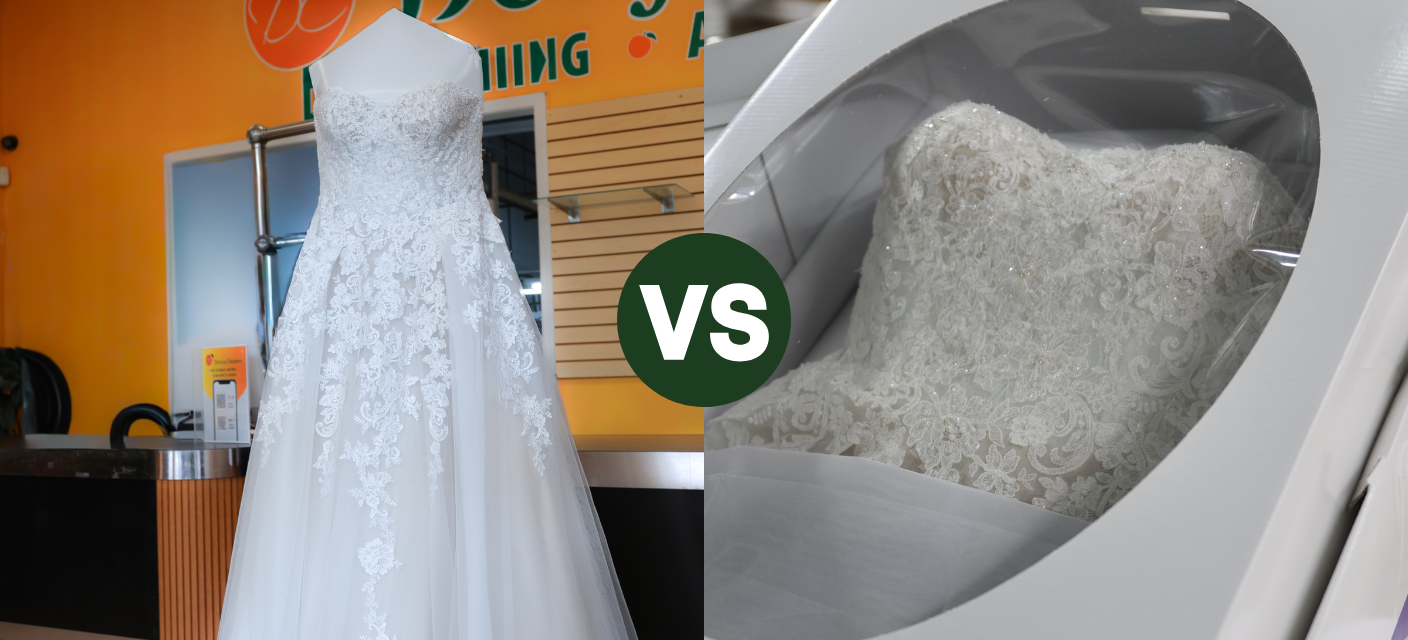
After the big day, one of the first questions many brides ask is, “What should I do with my dress?” You’ll often hear two terms: wedding gown cleaning and wedding gown preservation. They sound similar, but they’re not the same thing—and both are important to the long-term care of your wedding gown.
What is wedding gown cleaning?
Wedding gown cleaning focuses on removing anything your dress picked up on your wedding day, such as:
- Surface dirt and dust
- Makeup, deodorant, or perfume
- Food and drink spills
- “Invisible” stains from things like champagne or clear beverages
Professional wedding gown cleaning is typically done by a cleaner with experience in delicate fabrics and embellishments. The gown is inspected, stains are treated, and the dress is either dry cleaned or carefully hand-washed, depending on the fabric and construction.
Cleaning is essential before any type of long-term storage. Even stains you can’t see right away can darken or cause discoloration over time if they’re not treated.
Cleaning alone may be enough if:
- You plan to sell or donate your dress soon
- You want to re-wear it in the near future (for a photo shoot, reception, or vow renewal)
- You just want it fresh and spotless, but aren’t concerned about keeping it for decades
What is wedding gown preservation?
Wedding gown preservation goes a step beyond cleaning. It’s a specialized process designed to keep your gown in beautiful condition for many years—often long enough for future generations to wear it or for you to keep as a long-term heirloom.
A typical professional preservation service includes:
- Thorough, expert cleaning
- Hand treatment of stains and delicate areas
- Attention to both visible and “invisible” stains that can appear later
- Hand treatment of stains and delicate areas
- Repairs, if needed
- Fixing loose beads, tiny tears, or detached appliqués
- Archival-quality packaging
- Folding the gown with acid-free tissue
- Placing it in an acid-free, lignin-free box or chest designed for textiles
- Sometimes using an acid-free bust form to support the bodice and prevent creasing
- Folding the gown with acid-free tissue
The goal is to protect your dress from:
- Yellowing or discoloration
- Fabric breakdown
- Mold, mildew, and insect damage
When done correctly and stored properly in a cool, dry, dark place, a preserved gown can often remain in good condition for 50 years or more.
Preservation is a good choice if:
- You want to keep your gown as a keepsake or heirloom
- You like the idea of someone else wearing it in the future
- You want to protect fine lace, beading, or delicate fabrics over time
The key differences at a glance
Here’s a simple way to think about it:
- Goal
- Cleaning: Make the dress look fresh again after the wedding.
- Preservation: Keep the dress looking beautiful for decades.
- Cleaning: Make the dress look fresh again after the wedding.
- Process
- Cleaning: Stain removal and gentle overall cleaning.
- Preservation: Cleaning plus specialized treatments and archival storage.
- Cleaning: Stain removal and gentle overall cleaning.
- Packaging
- Cleaning: Dress may be returned on a hanger or in a regular garment bag.
- Preservation: Dress is packed in a museum-quality, acid-free box or chest designed for long-term storage.
- Cleaning: Dress may be returned on a hanger or in a regular garment bag.
- Longevity
- Cleaning: Good for the short to medium term.
- Preservation: Designed for the long term, helping prevent yellowing and deterioration.
- Cleaning: Good for the short to medium term.
- Cost
- Cleaning: Generally less expensive.
- Preservation: Typically a few hundred dollars, with many services falling in the $450–$600+ range depending on the gown and level of work needed.
- Cleaning: Generally less expensive.
How soon should you act?
No matter which option you choose, sooner is better.
Industry experts recommend having your gown cleaned and preserved as soon as possible—ideally within a few weeks, and generally within a few months of the wedding.
Here’s why timing matters:
- Fresh stains are easier to remove
- Body oils, drinks, and food can oxidize and darken over time
- Fabrics can start to yellow if left uncleaned for too long
If your dress has been hanging in a closet for a while, don’t panic—it’s often not too late. Many preservation specialists can still restore dresses years after the wedding, though it may require more work and cost a bit more.
How to choose what’s right for you
Ask yourself:
- Do I want to keep this dress long-term as a keepsake or heirloom?
- If yes, cleaning + preservation is usually the best choice.
- Am I planning to sell, donate, or re-wear it soon?
- In that case, professional cleaning alone may be enough.
When you speak with a cleaner or preservation service, like Deeya Cleaners, it’s perfectly okay to ask:
- How do you clean wedding gowns and treat stains?
- Do you use acid-free, archival materials?
- Will I be able to open the box and see the dress?
- How long do you expect the preservation to last?
A good professional will be happy to walk you through their process and answer your questions.
Bottom line
Cleaning gets your gown beautifully fresh again. Preservation takes that clean gown and packages it for the long run, protecting your memories for years to come. Once you know the difference, you can choose the option that fits your plans—and your dress—with confidence.